
Up until the last few years, Trisomy 13 and 18 have been among a few congenital syndromes that medical texts and experts deemed to be “incompatible with life.” It therefore has been a common practice for families and physicians facing this diagnosis to either choose abortions or to withhold certain medical interventions that would otherwise prove life-saving. Now, we know that more than anything, culture can influence these attitudes. Thus, we are in desperate need of shifting our culture out of the practice of believing the Death Narrative and choosing a path that promotes dignity, hope, and life that displays the works and glory of God (John 9:3).
⸻
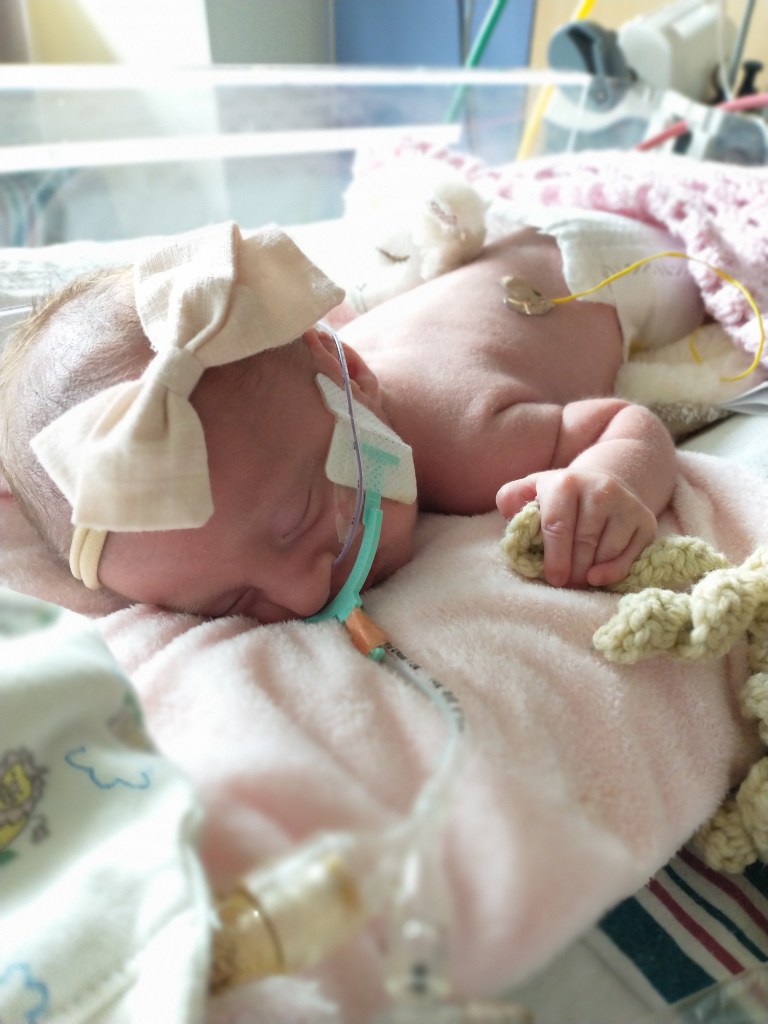
Two weeks after my third daughter was born in November of 2021, my wife (Dr. Katie Musser, DMD) and I learned that our 4.0 lbs newborn baby had full trisomy 18. Now, if you are unfamiliar with this disorder, the first thing you will probably do—the thing we all do to answer all of our questions—is to Google it. Here are a few phrases from the top few hits on the internet that might stand out to you:
“Edwards syndrome is a very severe genetic condition…” “The median of survival among live births has varied between 2.5 and 14.5 days. About 90% – 95% of babies do not survive beyond the first year and many live only a few days…” “…lethal abnormality that is almost always fatal at birth…” “Very small numbers of children with Trisomy 18 can survive as teens and young adults. If they do survive, they will require round-the-clock care and life-long home nursing support with activities of daily living. No young adults living with Trisomy 18 can live independently…” “Life-limiting…” “Life-threatening…” “…most affected fetuses die before birth, and about half of babies born alive die within their first week…” “…birth defects in organs that are often life-threatening…” “…has no treatment and is usually fatal before birth or within the first year of life…” “Heart defects…” “Other problems include apnea (the brain does not send a message to the body to breathe), difficulty feeding, under-developed lungs, bone abnormalities, hearing loss, eye defects…prone to develop Wilm’s tumor…” or “hepatoblastoma (liver cancer)”
You can skim through Google for a ways, but you will not likely find too many words of hope or encouragement when it comes to this chromosomal disorder (or trisomy 13 for that matter). Therefore, if you receive a trisomy 18 or 13 diagnosis and turn to Google, you will be left with one dark and all-consuming thought: “My baby is going to die.” I call this, the Death Narrative.
If you happened to read any news in 2023-24, it’s possible you will remember reading about the story of a Texas woman who wanted an abortion because she found out her [unborn] child had trisomy 18—except abortions were illegal in Texas, which put this story squarely in the Pro Choice / Pro Life headlines nationally for months. If you read about it, you will see incendiary Death Narrative—from headlines to quotes. I pulled the above “fetus has a lethal abnormality that is almost always fatal at birth” straight from the headline of this article in December of 2023. Here are some of her quotes from that article, “It is not a matter of if I will have to say goodbye to my baby, but when,” and “I’m trying to do what is best for my baby and myself, but the state of Texas is making us both suffer.” And from January 2024 from CBS, “We asked, ‘How long we could have with our baby – best-case scenario?’ And she [the doctor] said she thought maybe a week. If she [the baby] survived the pregnancy and the birth, that it might be a week. I didn’t want to watch her suffer. That would be very hard. She would have had to be placed directly on to hospice. There’s no treatment that can be done.” That’s it. There’s nothing that can be done. Complete and utter hopelessness.
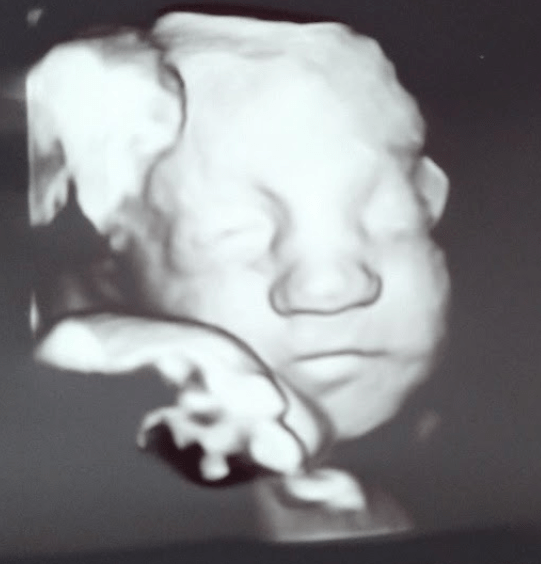
There is no question about it—the narrative that you choose to believe about your child (or your patient’s child if you are a healthcare professional) will have a profound impact on the decisions that you choose to make as a parent (or physician) on their behalf. In some ways, it can become a self-fulfilling prophecy. If you have internalized a belief that your child is going to die within days or months (as is the case for “90-95% of kids” with that diagnosis [as per Google]), then you will likely not choose to help give them a chance at life by offering surgery or respiratory support or other interventions. If the situation is doomed and hopeless to begin with, why would you want to draw it out and make everybody suffer even longer? What kind of loving parent (or caring physician) would you be in that case?
⸻
Now, my wife and I did things a little backward from how most folks do them these days. We knew we were having a high-risk pregnancy (namely due to only having one umbilical artery instead of the typical two) and so we were offered a range of genetic testing options that we could pursue. However, we chose not to do any testing because we knew that there was nothing we could do about any of it anyways—and none of it was going to impact our stance or our love for our child. We recognized that we were not in control of anything—especially in regard to how our unborn daughter was developing in the uterus. And we knew that there was nothing we could do from outside the womb that would change whatever was going on inside the womb (even though Katie did receive extremely painful steroid shots directly into her hind parts for the last few weeks of her pregnancy because there was a slim chance that they would help boost our unborn child’s defenses and growth. Mothers are truly rare and remarkable sacrificial creatures. Being the dad, I was never offered any glute steroids. I also didn’t ask…). It was all in God’s hands regardless of whether we had any clear diagnosis before delivery or not.

I believe this willful act of not-knowing—of faith—was a small mercy that saved us an incredible amount of pain and stress and torment in that season—particularly when it came to the realm of making medical decisions that were in her best interest. What that act of not-knowing did was it saved us from internalizing the Death Narrative before our baby had a chance to show us that she had the capacity to live—that she deserved a chance at life. As a result, we weren’t faced with decisions like “our baby is going to suffer and die [internalized Death Narrative], do we abort or not?” or “she’s not breathing, do we give oxygen or not?” or “her heart isn’t going to function for long without surgery, do we do it or not?” or “she’s having seizures, do we give her meds or not?” or “she can’t eat on her own, do we hook up a nasogastric tube or not?” or “if she codes, do we try and save her life or not?” Our answers were: “That’s not an option, we want to meet our daughter regardless of her chromosomal count,” “of course we give her oxygen,” “yes we will take the life-saving heart surgery,” “duh we give the meds,” “absolutely we get her on a feeding tube,” and “double duh we try and save her life if she codes.” Whatever she needed, we pushed for that option—we advocated for that intervention. We let her tell us what she needed and we gave her that support—she was the boss. The idea of giving her every viable support and therefore, chance to thrive and succeed at life, is called the Life Narrative.
Here’s the problem with our culture’s current stance on trisomy 13 and 18—the basis of the Death Narrative is not even 100% true (“my baby is going to suffer and die”) because it is an unknown! Nobody knows the future! Nobody knows how these syndromes will present themselves! The reality is that there is a WIDE range of kids living with trisomy 13 and 18—every case is different—every kid is different. There is no one-size-fits-all with extra chromosomes! While it may be true that a majority of kids with these diagnosis will pass away within their first year—(we have walked alongside many other families where this has been the case)—that stat in no way means this will necessarily be true for your child. Some kids are mosaic (only some cells affected) and can walk and communicate and eat similarly to anybody else. Yes, some kids will require open heart surgery within a few months but others won’t. Some kids eat all of their meals by mouth and others won’t be able to. Some kids require oxygen support or ventilators and others don’t. Some kids are on half a dozen meds while others are on zero! Medical experts make their best guesses, but in many cases, they can be wildly off the mark. Nobody knows the future. Nobody knows what your kid is going to be like or what medical battles they will need to fight in order to live. But the Life Narrative, at the very least, gives them the chance and the dignity to show us who they are and what they need in order to thrive. It assumes life as the baseline, not death.

You know, it wasn’t that long ago that our culture believed the Death Narrative for kids with Trisomy 21, also known as Down syndrome. But something happened within our culture and as of the last 40 years or so, we now have internalized the Life Narrative for people with Down syndrome. Thomas Collins, MD, was one of the co-authors of a recent study (published in the Stanford Medical Magazine in 2018), which among other things, proved that newborns with trisomy 13 and 18 can benefit from heart surgery (—I’m not a heart surgeon, but… duh!) as well as other interventions. For trisomy 18, they found that the number of children that survive more than doubles after surgery. Here’s what he said about Down syndrome, “Back in 1975, folks would’ve said there’s nothing we can do to help those babies. But now people have proven if you do heart surgery early, patients with Down syndrome can live to adulthood and be active members of their community. The difference it makes for them is tremendous.” To further quote this study, and the need to challenge the narrative for trisomy 13 and 18, “Forty percent of people with Down syndrome have congenital heart disease, and unlike cases of trisomy 13 and 18, it is now standard-of-care to operate on children with Down syndrome.” If you Google trisomy 21 now, there is zero Death Narrative present. Page after page that you open is all about how people diagnosed with Down syndrome can lead healthy lives with the right care. To quote my daughter’s cardiologist, “The paradigm is shifting for kids diagnosed with trisomy 18,”—we are just needing culture to catch up.
⸻
Here’s a tid-bit from the Life Narrative that you won’t likely glean from reading about these disorders online—you will not find a more content person on the entire planet than someone living with trisomy 13 or 18. They are so joy-filled and easy to please—full of big belly laughs and cheeky smiles. These kids will all have their own personalities—they are not just suffering and languishing in their disability and all of the things that they can’t do or won’t be able to do. Some kids are sassy, others are goofy. They can wake up cranky. Their eyes will light up when they want something or when they see someone they love or when they hear their favorite tune. Many of them love music and neon glow-stick dance parties. They will love and be cherished by their siblings. They will certainly express their delight or displeasure and will be amused by life’s simplest delectations (flatulence included!). No matter the circumstances, they seem to generally be filled with an abundance of peace.

Let me tell you about all the fullness of life (John 10:10) that we see in our sweet Izzie (age 3 now). Just because she cannot run and kick a soccer ball does not mean she is a spiritless vegetable. Just because she will never walk down the aisle doesn’t mean she isn’t adorned with resplendent grace. Textbooks call it an “error in cell division”—but I tell you that nothing about her is errant. She was designed with careful intentionality, beautiful and thoughtful precision, a perfect reflection—a pure Imago Dei—tenderly knit together by the gentle hands of her ever-loving Creator (Psalm 139). A flick of her eyebrow contains the words of a thousand sonnets. Her eyes are literal windows to her soul. They can communicate fear and anger, delight and curiosity. She is aware of her surroundings—she knows her bedroom, her people, her favorite toys. She receives endless pleasure from shaking her maraca in her face. Her peals of laughter—eyes scrunched tight—sucking in breaths between guffaws in a tickle fight—say, “do it again!” The way she settles into stillness, like dew at first light, when I pluck my guitar at her side—says, “do it again.” And how she glances over when you back away from covering her sweet, warm body in dozens of tiny kisses after a bath says, “do it again?” She is immeasurable. She is boundless. Izzie would be content to just lay on her back in her bed and look up at her hands for hours at a time—in awe—just turning one over and back, then the other—over and back. A slow-moving ceiling fan can absolutely blow her mind. She loves to roll around her bedroom (and her bed!). She can give super slappy high fives. She loves to sing (squeal? screech?) and laugh at 3 AM, seemingly unprovoked. Her hair is wild like a freshly zapped mad scientist. Her perfect tiny hands wrap around your finger as she holds you tight in a loving embrace. She will also let you know when she finds you unamusing—by looking over her glasses at you like a disgruntled grannie. Izzie screams with delight when her mom crouches down in front of her. She is endlessly amused with poking herself in the eyes. Not to mention, Izzie is the only one in my whole all-girl-family that will actually watch football with me! (And I can tell she enjoys it!).

If you are facing this diagnosis, in some ways your life is over—at least the life you knew—(good luck making that beach vacation happen this year like you had originally planned…) But in some ways, your life is just beginning. You are about to learn to see life and living through a whole new lens. You are about to experience joy and sorrow in the most unbelievable and sacred of ways. There is something so profound and distinctly holy that you will encounter when you surrender your life—goals, plans, career—and choose to sacrificially love someone else (John 15:13) no matter the cost. You will encounter and experience God in new and powerful ways—his presence and his peace and his steadfast love will be refreshed for you. You will share in the sufferings of Jesus and be stronger for it. You will learn to daily depend and rely on the power of the Spirit as you live every day one sacred moment at a time.

I hope my words inspire courage and hope—not false hope, mind you! I am not going to lie to you and say it will all be sunshine and butterflies!—this will undoubtedly be the hardest journey you will endeavor to walk. There will be fear and beauty and pain and laughter and anguish—there will be untold sleepless nights and mad scrambles to the hospital. There will be endless appointments and therapies and decisions. You could be the most saintly saint around but there will absolutely be times when you swear like a sailor (You don’t believe me?! Try sitting on hold for hours with the Social Security Administration and see if you don’t end up speaking a little French when it’s all said and done! $#%&!!!) There will be milestones and accomplishments and setbacks and frustration. There will be obvious grief and there will be grief that is hidden—that flattens you at the most unforeseen times. God will show up through the most unlikely of people. You will uncover a secret fervency in your prayers and in your worship. The story is yet to be written! As with any journey, there will be mountain tops and there will be bitter valleys—but there is also always the Good Shepherd. There are promises that we will not be consumed (Lamentations 3:22)—that He will be with us when we pass through the waters and walk through the fires (Isaiah 43:2). You see, our Faith is literally built on the Life Narrative. Jesus did not stay dead. He conquered death! Isaiah 25 says that He will swallow up death forever—that He will wipe away tears from all faces and that we will feast in the House of Zion! There will be abundant joy for all who set their hope on the firm foundation of Jesus! In 2 Corinthians 4, it says, “So we do not lose heart. Though our outer self is wasting away, our inner self is being renewed day by day. For this light momentary affliction is preparing for us an eternal weight of glory beyond all comparison, as we look not to the things that are seen but to the things that are unseen. For the things that are seen are transient, but the things that are unseen are eternal.”

 DAVID SCOT MUSSER