
Howdy folks!
A big shout-out to Connor, the one person who immediately called me out for ghosting your inbox last month… 🫥
📌 In This Edition…
- Writing a Book is like building a Pot: They’re both quite messy…
- Book Talk: It’s been a while since my last one!
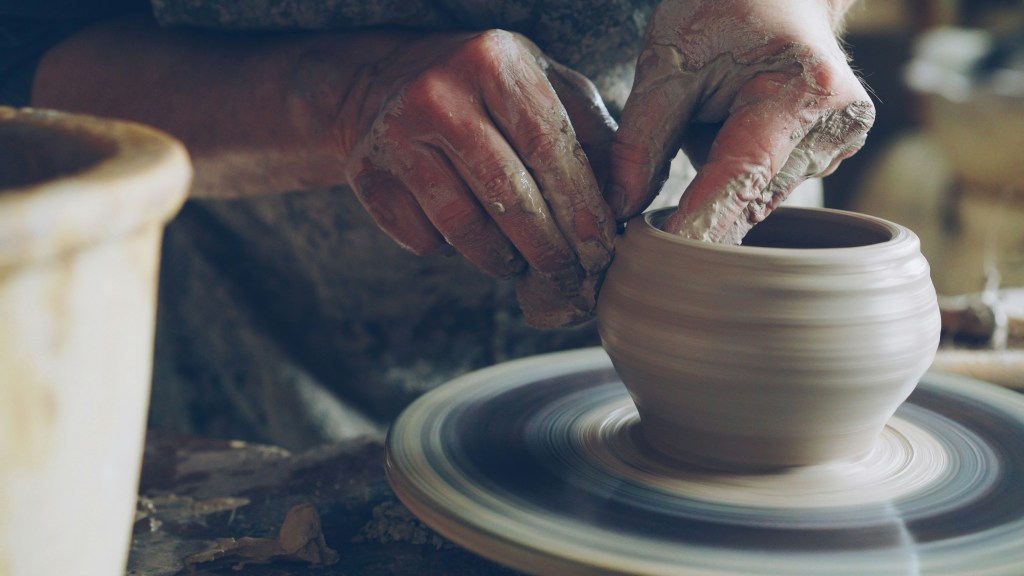
🏺 What Pottery has Taught Me about Writing
During COVID, Katie and I discovered and fell in love with The Great Pottery Throw Down (you can even watch quite a few seasons HERE). If you’ve never seen it, imagine The Great British Bake Off, except with clay, occasional blindfold throwing, and significantly more emotional vulnerability from the judges. Getting Keith to cry is basically the pottery equivalent of a Paul Hollywood Handshake. It’s a delightful series.
Before the contestants ever touch the clay, they start with an idea. A sketch. A vision. Once the challenge has begun, they pick up an unremarkable block of earth, cut off a chunk, throw it onto a workbench, and begin wedging it—folding, compressing, and kneading it over and over again to remove air bubbles and prepare it for shaping. It’s sweaty, grueling work.
Then they slap it onto the wheel and begin to turn it.
Slowly, patiently, they pull up the walls until the form they’re envisioning begins to take shape. Sometimes the clay cooperates. Sometimes it collapses. Sometimes the potter gets distracted for a moment, and the entire piece buckles in on itself, forcing them to start over again.
After that, the piece sits in the drying room. Sometimes for days.
Then comes trimming. Removing excess weight and material. More refining. More shaping. Smoothing. Adding texture and detail. Then firing in the kiln at around 2,000 degrees. After that, they carefully paint on oxides and glazes, bringing those textures to life. Finally, they fire it once more and hold their breath, praying to the “kiln gods” that it survives and doesn’t warp or crack or explode.
The whole process can take several weeks and at every stage, something can go terribly wrong.
Over the last year, writing this book has felt remarkably similar to building a pot.
There are days that feel like throwing clay onto a wheel—new ideas arriving faster than I can capture them. Other days feel like trimming away excess material, cutting entire paragraphs that took hours to write because they simply don’t belong in the final piece. Sometimes building a chapter feels like wedging the clay—the unglamorous work of slapping and kneading it, turning it over and over and over again.
Some chapters have needed to sit untouched for weeks before I could see them clearly and know what to refine. Others have required dozens of small adjustments, each one almost imperceptible on its own, but collectively changing the entire dimension of the piece.
The hardest part, surprisingly, hasn’t been deciding what to write. It’s been deciding what not to write. What stories belong? Which ones distract? What serves the larger shape of the structure and arc?
Every addition affects everything around it. In pottery, you can’t simply slap on a new handle or decorative element and call it finished. You have to score it, blend it, compress it, and smooth the seams until it becomes part of the piece itself. The best additions disappear into the whole.
As with clay, writing remains surprisingly fragile for much longer than you’d expect. A careless edit can distort a chapter. A rushed decision can flatten something that needed more time. The work requires patience, restraint, and a willingness to trust the process.
Lately, I’ve found myself thinking about a deeper reality.
As I reflected on all this, I found myself returning to one of Scripture’s most enduring images: God as the potter and us as the clay.
Isaiah declares, “We are the clay, and You are our potter; we are all the work of Your hand” (Isaiah 64:8, MEV). Paul picks up the same image in Romans 9:20-21, reminding us that the potter has authority over the clay He is shaping. Even earlier, the language of pottery appears in Genesis itself. The Hebrew word yatsar—to form, fashion, or shape—is used to describe God forming Adam from the dust of the ground in Genesis 2:7.
From beginning to end, Scripture presents God as One who patiently forms His people.
For a long time, I imagined that process happening in a single dramatic moment—a breakthrough, a revelation, a decisive turning point.
But increasingly, I’m convinced formation works more like pottery.
Slow.
Intentional.
Repeated.
A little shaping. A little trimming. A little time in the fire of the kiln.
Then back to the wheel again.
Looking back, I can see God’s fingerprints all over places that felt frustrating or unfinished at the time. Seasons I wanted to rush through were often the very places He was doing His most careful and intimate work.
My book is finally nearing the finish line. At least, I think it is.
Katie showed me a quote from James Clear this week: “When you are creating something, you will usually find that once things appear 90 percent done, you are actually about halfway there. But you have to create the first 90 percent in order to see the half that needs to be revised.”
He ain’t wrong.
But perhaps that’s fitting.
Clay doesn’t become beautiful by rushing through formation.
It becomes beautiful by remaining in the Potter’s hands.
📚 Book Talk
These have been a few of my Spring Reads.
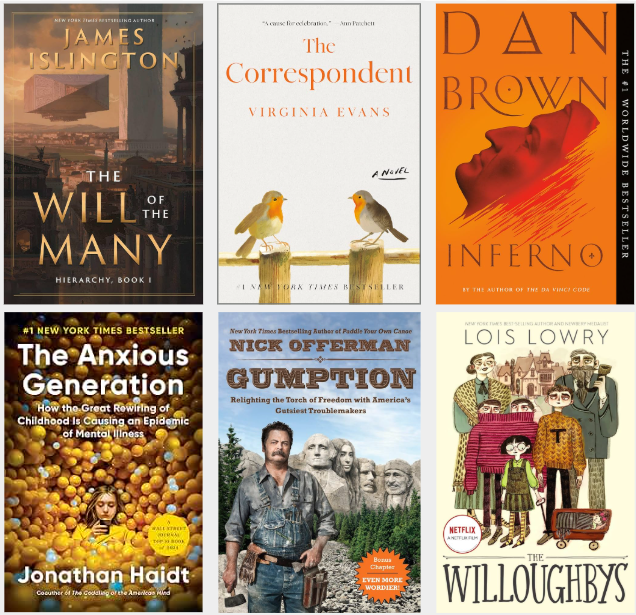
The Will of the Many by James Islington
You ever read one of those books that sinks its claws into you and refuses to let go until you finish? That’s what this one did to me (and I’d like to formally apologize to my wife for disappearing into it for a few weeks 😬). I found myself waking up in the wee hours of the morning thinking about it, tiptoeing out of bed, grabbing a cup of coffee, and reading until I could no longer pretend I didn’t have any other responsibilities to attend to. It’s the first book in The Hierarchy series—a mind-bending fantasy novel with the storytelling of Patrick Rothfuss and the action, scale, and darkness of Brandon Sanderson. If you’re looking for a way to stop thinking about the price of gas, the state of the world, or your ever-growing to-do list, this book will happily consume your life and attention instead.
The Correspondent by Virgina Evans
I’d been waiting on my library hold for this book for months. There seemed to be quite a bit of buzz around it, so I started it with high expectations. A quarter of the way through, I wasn’t sure it was going to live up to them. In fact, I wasn’t even sure it was worth finishing. Then it caught me. A single passage stopped me in my tracks. Goosebumps. Suddenly, the entire story clicked into place. The Correspondent is an unconventional novel told through letters and emails, which means it takes a little time to figure out who is who and what is what. But once the pieces begin to settle, Virginia Evans pulls it all together masterfully—and painfully. It’s reflective, poignant, messy, and beautiful. A story about loss and belonging, regret and forgiveness. It’s immensely memorable and deeply human. Mmm. Please read it.
Inferno by Dan Brown
Admittedly, Dan Brown ain’t gonna be for everyone. His books can veer into some pretty unique—and occasionally downright offensive—narrative territory (depending on who you are). But few authors can blend art, architecture, history, science, and conspiracy into a fast moving page-turner quite like he can. Inferno is part National Treasure, part Bourne Identity. It’s puzzles and codes, secret passages and symbology, cat-and-mouse chases through some of the most famous cities and landmarks in the world, all wrapped around a threat that could change humanity forever. Whatever you think of Brown’s storytelling, the breadth of his knowledge is staggering. He has a gift for making you feel simultaneously mind-blowingly entertained and vastly undereducated. This is the fourth book in the Robert Langdon series. I would say it’s the perfect beach read, but only if you don’t have kids to keep an eye on…
The Anxious Generation by Jonathan Haidt
If you’re a parent with kids under 18, or you work with kids under 18, this book is a must-read. Haidt, a social psychologist, explores what happened when we traded a “play-based childhood” for a “phone-based childhood.” He traces the decline of free play, independence, and face-to-face interaction, and examines how smartphones, social media, and constant connectivity to the internet have reshaped childhood over the past decade. Drawing from an enormous body of research, he connects rising rates of anxiety, depression, loneliness, sleep deprivation, attention fragmentation, social comparison, perfectionism, and addiction to what he calls the “great rewiring of childhood.” He also explores why these changes have affected boys and girls in different ways. It’s one of those books that leaves you looking at the world—and your kids and parenting—a little differently. It also made me nostalgic for a simpler time, when playgrounds still had merry-go-rounds and neighborhood kids disappeared outside for hours until someone yelled that dinner was ready.
Gumption by Nick Offerman
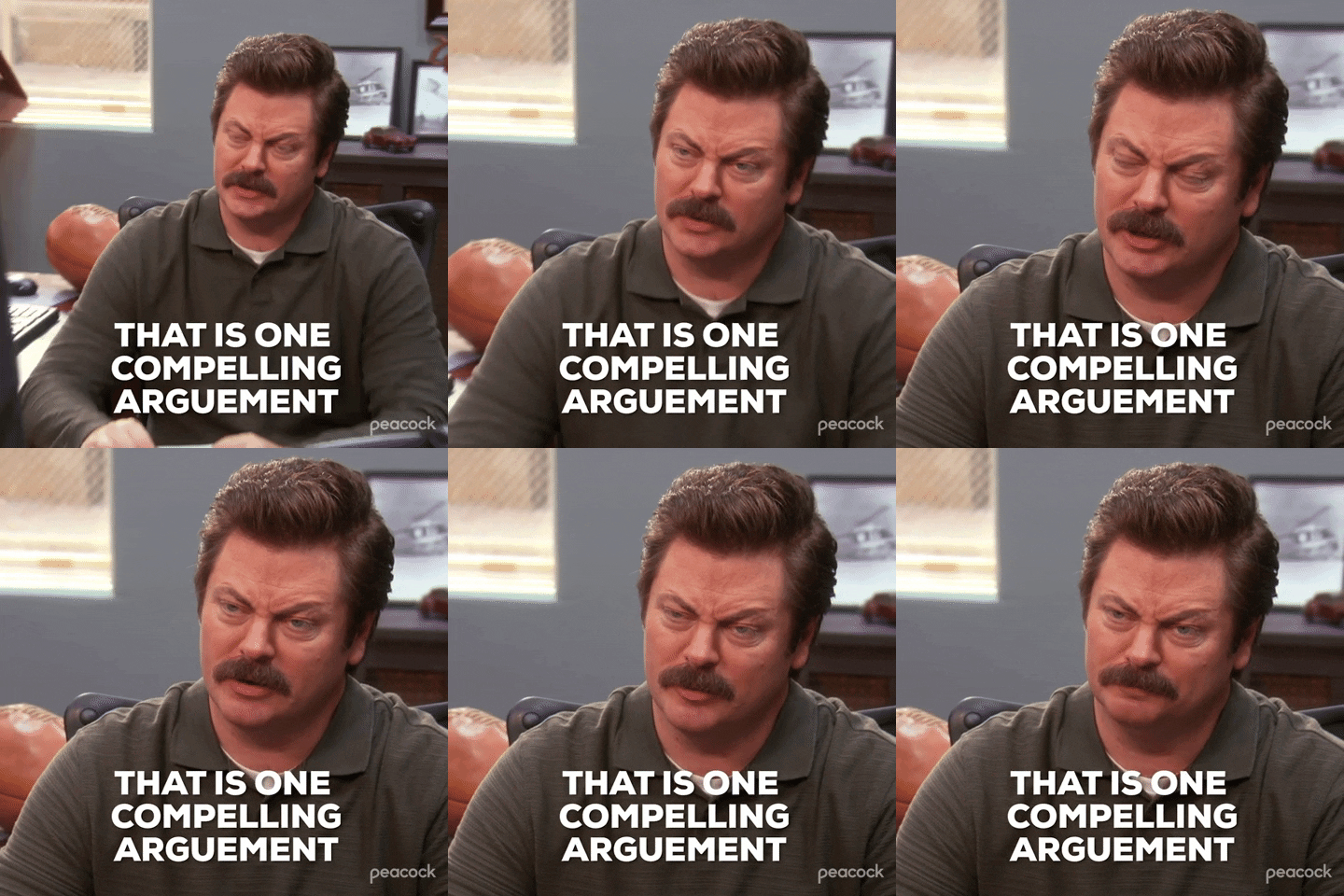
Maybe you’ve somehow missed the fact that America is turning 250 this summer. If so, allow me to present what may be the most enjoyable patriotic homework assignment ever devised. In Gumption, Nick Offerman walks readers through his “personal pantheon of great Americans”—from George Washington to inventors, artists, activists, politicians, and assorted oddballs who have helped shape the country along the way. He mixes surprisingly thoughtful history with his trademark humor, woodworking wisdom, and a robust vocabulary that deploys words like “titillating.” Let me simplify the sales pitch: Do you enjoy history? Do you enjoy laughing? Do you enjoy Ron Swanson from Parks and Rec? If you answered yes to any of those questions, this book is for you. Listen to the audiobook. Hearing Nick Offerman read Nick Offerman is exactly as titillating as it sounds.
The Willoughbys by Lois Lowry
I recently read this aloud to the girls, and it was thoroughly delicious. First of all: Lois Lowry. That’s usually enough of an endorsement all by itself. The Willoughbys is a delightfully absurd parody of classic children’s books. Tim, the twins, Barnaby A and Barnaby B, and their little sister Jane are saddled with spectacularly unpleasant parents and find themselves dreaming of the one thing every child is apparently supposed to avoid: becoming orphans. What follows is a wonderfully ridiculous adventure involving an odious nanny, a lonely baby, a wealthy candy magnate, and enough literary winks and nods to keep adults laughing right alongside their kids. Think Lemony Snicket, but warmer. Mary Poppins, but stranger. It’s clever, charming, and one of the most enjoyable read-alouds we’ve stumbled across in quite some time.

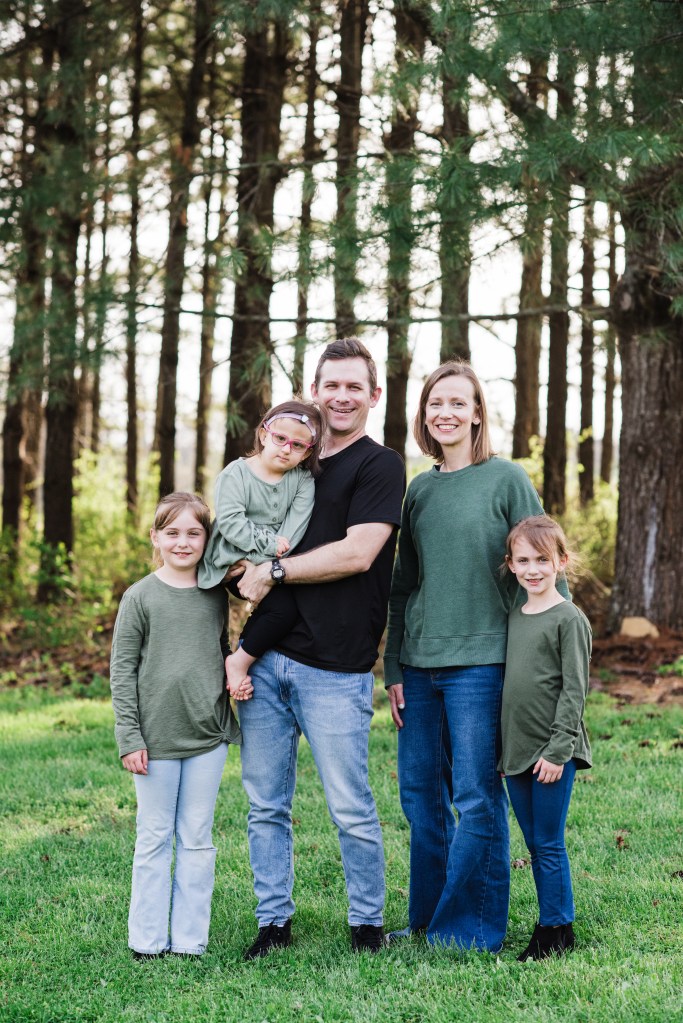
The A-Frame is DONE! (Basically.) Though so far it has functioned more as a He-Shed than a She-Shed… Katie also wrapped up her time with CMDA after five years on staff. She is transitioning into a new season as a full-time mom, homeschool educator, and keeper of our increasingly chaotic Izzie medical calendar.
It’s been a strange season, in some ways. We’re still figuring out what’s next—where to procure insurance etc. There are still plenty of unanswered questions. And yet, for all the uncertainty, there is a surprising amount of peace.
Maybe it’s the joy of writing in the A-Frame. Maybe it’s the pace of summer days. Maybe it’s simply the kindness of God. But lately I’ve found myself grateful for ordinary things: coffee in the morning, the sound of rain, evenings on the floor with Izzie, reading aloud to the girls, and unhurried conversations with Katie before bed.
For now, we’re trying not to rush ahead. We’re holding the future with open hands, trusting God’s provision and timing one day at a time. In a world that constantly pushes us toward bigger, faster, and more, this season feels like an invitation to something quieter: rest, presence, and the kind of steady faithfulness that often goes unnoticed.
With gratitude,
David
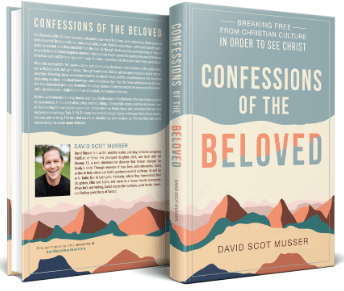
P.S. My manuscript has officially completed the beta reader stage! A huge thank you to everyone who read early drafts, left comments in the margins, sent emails, hopped on phone calls, and wrestled with me over how to make this story better. Writing may be a solitary endeavor, but this book would not exist in its current form without your generosity, wisdom, and encouragement. I’m deeply grateful for each of you. And after years of work, I honestly can’t wait to finally share this story with the world in November.

