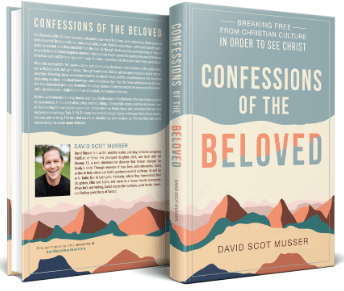
Howdy folks!
A word of advice: when you write a book, don’t schedule your heaviest revisions for the middle of the World Cup…⚽

📌 In This Edition…
- Quote
- Question
- Quick Update
🗻 A Line I’m Carrying
“Humility is the mother of giants. One sees great things from the valley; only small things from the peak.”
— G.K. Chesterton
🔬 A Short StoryQuestion
When I was a kid, my favorite place on earth was CosmoCaixa, the science museum. Most museums in Spain were filled with priceless paintings and ancient artifacts—things that dated back before Jesus was alive. As Emperor Kuzco famously put it:
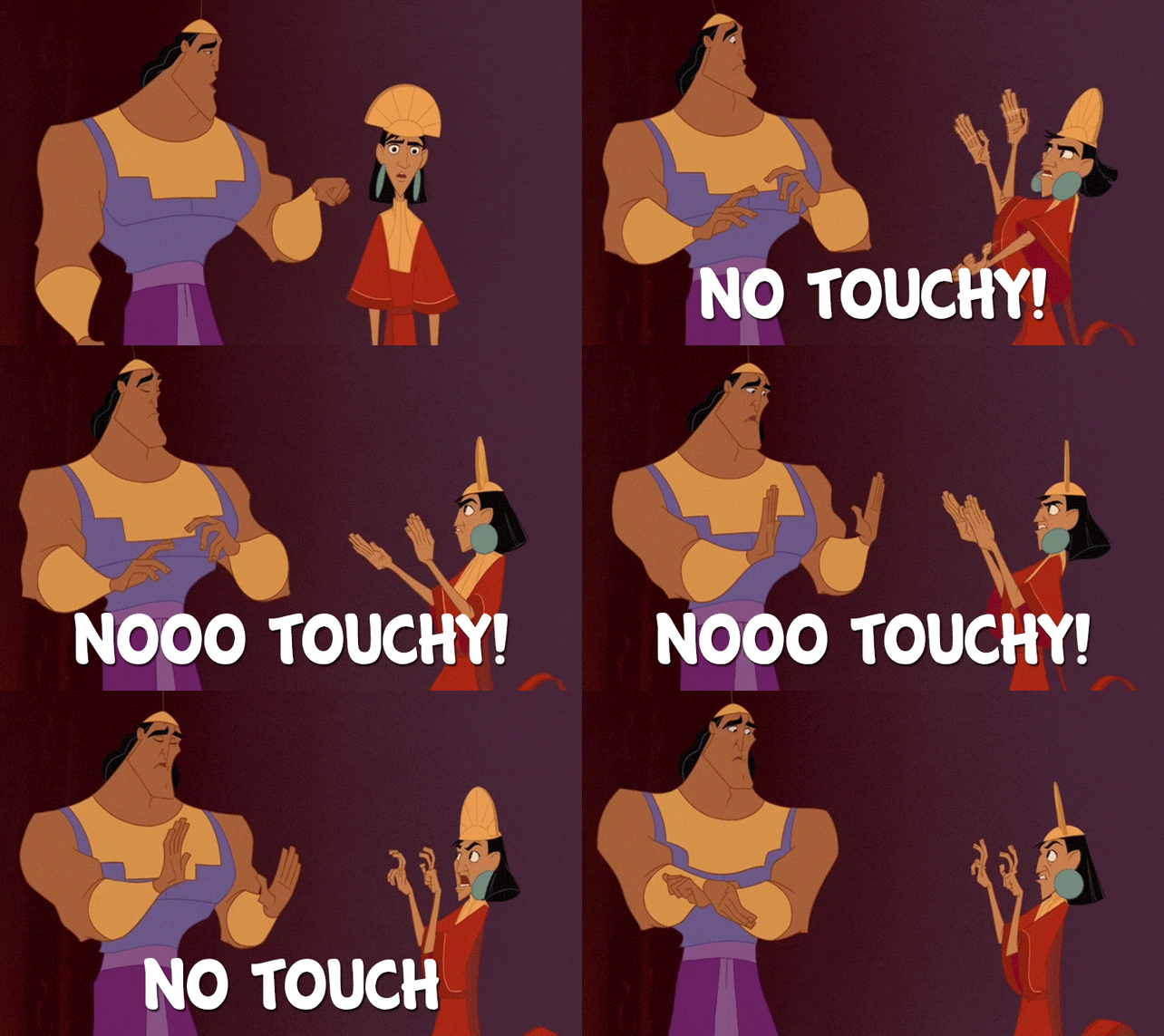
But CosmoCaixa was different. It was hands-on. You could literally touch everything. I was like a kid in a candy store—(which, in retrospect, is a questionable metaphor for missionary kids. Stores were more often observational experiences than participatory)—except instead of candy it was pulleys and prisms, giant soap bubbles, optical illusions, pendulums, lasers—even a massive 2,000 kg granite sphere floating happily in a fountain. I vividly recall touching the large plasma globe, purple lightning chasing my fingertips across the glass. Was that making me… more powerful? I could have easily spent days at CosmoCaixa.
Fast forward to the end of my master’s program in education. Our cohort had gathered in a loose circle with the professor who would eventually oversee our Capstone research projects. She asked us to go around, introduce ourselves, and answer one simple question:
“What are you curious about?”
There was the obligatory awkward moment of silence while everyone waited for someone else to volunteer first.
I didn’t have to think very long because my answer instantly popped into my head.
“Hi, I’m David. And I’m curious about science.”
I had just inhaled a breath, about to kick things off—but precisely before the words left my mouth, the girl to my right jumped in.
“Hi, I’m Michelle,” she began confidently. “I’m interested in examining the longitudinal impact of adverse childhood experiences—particularly parental incarceration—on executive functioning and academic growth trajectories among historically marginalized upper elementary students.”
😳
There was a murmur of approving nods around the circle as I blanched.
Oh… yeah… I get it now… That definitely makes more sense…
As the introductions continued around the circle, I frantically tried to come up with something that sounded a little more… academic. Something with words like pedagogical or socioeconomic variables. Anything but “science.” I couldn’t believe how close I had just come to answering like a seven-year-old who had just discovered dinosaurs.
Looking back, I kinda wish I’d gone with my first answer (instead of something about alternative approaches to discipline beyond school suspensions).
According to Harvard child psychologist Paul Harris, children ask roughly 40,000 questions between the ages of two and five. Most of them aren’t simply asking what something is—they’re trying to understand why it is.
Why is the sky blue? Do fish ever get thirsty? Why can’t I tickle myself?
Children are relentless in their pursuit of understanding. Their questions are brimming with wonder.
Adults ask plenty of questions too, of course—but ours tend to sound a little different.
When’s that deadline? How much does it cost? Where’s my phone? Did I remember to put the bins out?
It got me thinking. Children ask questions because they are keenly aware that there are certain things they don’t yet understand. They assume that the world still has something to teach them. And they assume that the people around them might know something they do not.
I’m not sure when that changes. But somewhere along the way, many of us begin to feel like we’re supposed to have all the answers. We become quicker to defend our opinions than to examine them—less likely to ask, “What am I missing?” and more likely to assume we’ve already seen the whole picture.
We stop asking the kinds of questions that begin with curiosity and wonder. We become less comfortable saying, “I don’t know,” or “Help me understand.”
Maybe that’s where humility begins. It shifts the posture toward something softer. It’s simply the willingness to leave the door open a crack. To believe that there may still be something here that I cannot yet see. Something the world is trying to teach me. Something another person already knows. Something God has been waiting patiently for me to notice.
There may still be something here for me to learn after all.
So now I’m curious…
What have you been curious about lately?
Bonus points if it’s not polished or scholarly.
Maybe you’re wondering about prayer. Or parenting. Or birds. Or sourdough. Or migratory patterns of butterflies. Or why your tomato plants refuse to cooperate every summer.
Or maybe there’s a question you’ve carried around for years. A hurt. A longing. A hope.
Whatever it is, I’d genuinely love to hear it. Hit reply and tell me what’s been stirring your curiosity lately.
📚 A Quick Update
- Yesterday was Katie’s 37th birthday. It was extra special because she thought she was turning 38. Feel free to message her something you love about her (sorry, Katie).
- I am forcing myself to wrap up my beta revisions on Tuesday, June 30. I feel like I am face-plant inch-worming my way across the final stages of this marathon of a writing process. But light is indeed at the end of the tunnel. Thank you for your steady encouragement along the way.
- Izzie will have surgery on Wednesday, July 1 (the first of multiple surgical and diagnostic procedures coming in 2026). Her adenoids and tonsils will be removed, and she may also get tubes in her ears. She will also have a drug-induced sleep endoscopy that will check her airway and hopefully provide additional insight into her severe sleep apnea. Additionally, urology will be doing a bladder diagnostic in preparation for neurosurgery later this summer regarding her tethered cord. Her last surgery was in 2023, so we are feeling a bit tingly this week.

Stay curious, my friends,
David